Navigating Reward Cycles That Link Introductory Spins on Digital Reels to Collaborative Dealer Games and Expanding Jackpot Pools via Flexible Transfer Options
Written by Taylor Coleman · Aug 26, 2026
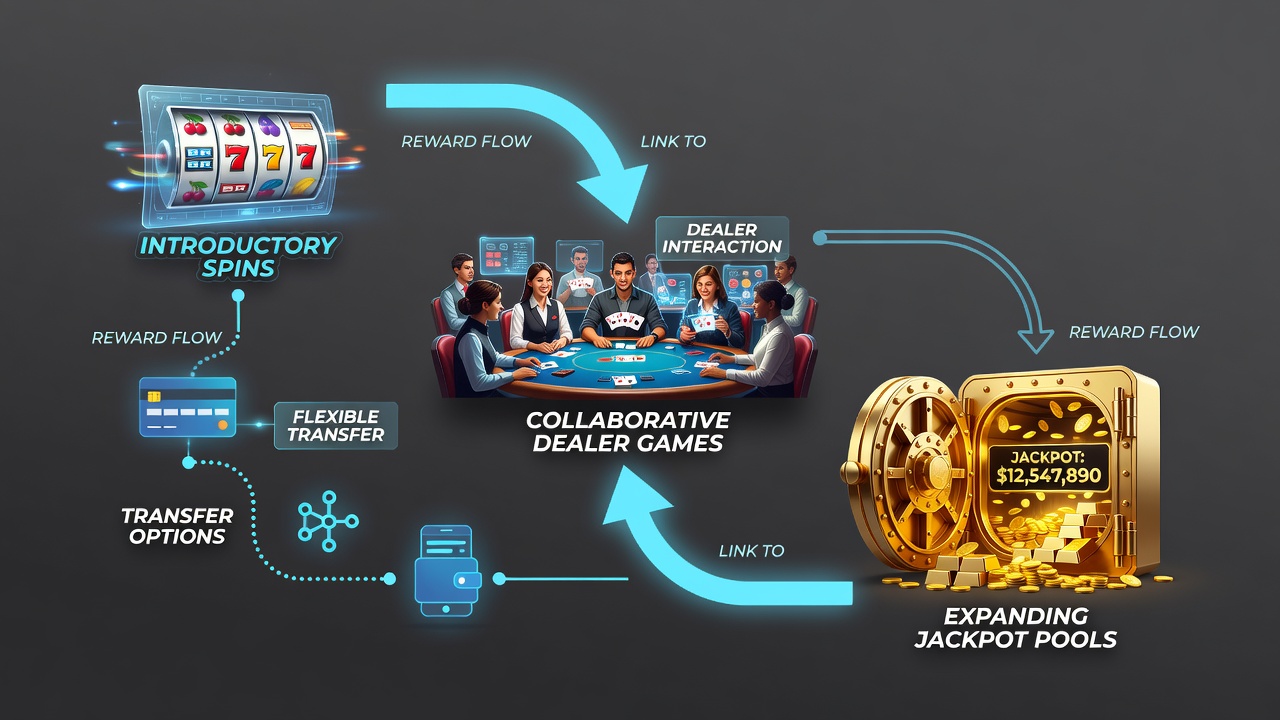
Navigating Reward Cycles That Link Introductory Spins on Digital Reels to Collaborative Dealer Games and Expanding Jackpot Pools via Flexible Transfer Options
Players encounter structured reward cycles that begin with introductory spins on digital reels and progress through flexible transfer mechanisms toward collaborative dealer games and shared jackpot pools, and these pathways have gained measurable traction in regulated markets by August 2026. Data from the Nevada Gaming Control Board indicates that operators tracked a 12 percent rise in cross-game transfers during the first half of the year, driven by integrated bonus ledgers that convert reel-based credits into table-game entry points without resetting player progress.
Mechanics of Introductory Spin Cycles
Introductory spins typically arrive as deposit-matched or loyalty-triggered incentives on digital reels, where each outcome feeds a persistent reward ledger that records accumulated credits, multipliers, and eligibility markers. Observers note that platforms maintain these ledgers across sessions so that remaining balances or qualified thresholds carry forward when players elect to shift formats. Research from the University of Nevada, Las Vegas Center for Gaming Research shows that such persistence reduces session abandonment rates because users retain value instead of starting from zero upon switching game types.
Flexible transfer options appear as in-account toggles or automated prompts that convert reel credits into dealer-game buy-ins at predefined exchange rates, and these rates often incorporate a small premium that funds the expanding jackpot pools. Operators configure the rates through backend algorithms that monitor pool sizes in real time, ensuring contributions scale with transfer volume rather than fixed percentages alone.
Progression to Collaborative Dealer Games
Once transferred, credits open access to collaborative dealer environments where multiple participants share side bets or community bonus rounds that feed the same jackpot pools. Systems log each transfer timestamp and amount, creating audit trails that regulators review for compliance with responsible-gaming thresholds. In August 2026 several platforms introduced tiered transfer windows that unlock larger dealer tables only after a minimum number of introductory spins have been completed, a design choice intended to sequence play without imposing hard session limits.

Jackpot Pool Expansion Through Transfers
Jackpot pools grow when a portion of each transferred credit amount routes into a communal reserve that resets or rolls over according to predefined trigger events. Operators publish pool balances via in-game meters and external dashboards, allowing participants to monitor growth before committing further transfers. Evidence from the Alcohol and Gaming Commission of Ontario reveals that pools receiving contributions from both reel and dealer segments reached average sizes 18 percent higher than pools limited to single-format contributions during comparable periods in 2025.
Transfer flexibility also extends to partial conversions, where users move only a selected fraction of reel credits while retaining the remainder for continued spinning. This option maintains engagement across formats and distributes contributions more evenly across the day, smoothing pool volatility that previously occurred when large lump-sum transfers hit at once.
Regulatory and Technical Safeguards
Regulators require that transfer interfaces display clear conversion ratios, remaining eligibility counts, and any applicable wagering requirements before execution. Platforms embed these disclosures within the same screen used for the transfer action, reducing the steps users must navigate. Technical logs capture every conversion event, and independent auditors sample these records quarterly to verify that jackpot allocations match published formulas.
August 2026 saw the rollout of API updates that allow real-time reconciliation between reel ledgers and dealer-game wallets, shortening the interval between transfer initiation and pool crediting from minutes to seconds. These updates also support conditional transfers that pause if a player’s responsible-gaming limits are reached, a feature now standard in multiple North American and European jurisdictions.
Conclusion
Reward cycles that connect introductory spins on digital reels to collaborative dealer games and expanding jackpot pools rely on transparent transfer options, persistent ledgers, and regulatory oversight that together create measurable progression paths. Data collected through August 2026 confirms that these integrated systems sustain player movement across formats while directing incremental contributions into shared reserves, and continued technical refinements are expected to maintain that linkage in subsequent reporting periods.