Governor Spanberger Vetoes Fairfax County Casino Referendum, Preserves Local Authority
Written by Riley Brooks · Apr 12, 2026

Governor Spanberger Vetoes Fairfax County Casino Referendum, Preserves Local Authority
On April 10, 2026, Virginia Governor Abigail Spanberger delivered a decisive veto against Senate Bill 756, effectively halting a push that would have compelled Fairfax County to conduct a referendum on constructing a Las Vegas-style casino in the Tysons area, even as the Fairfax County Board of Supervisors stood in unanimous opposition; this move underscores ongoing tensions between state-level ambitions for expanded gaming and the preferences of local communities, particularly in one of the nation's wealthiest suburbs.
What's interesting here is how the bill, sponsored by Senate Majority Leader Scott Surovell—a Democrat representing Fairfax—sought to bypass typical local governance structures, aiming to inject a sixth commercial casino into Virginia's gaming portfolio despite resistance from those closest to the proposed site; Tysons, known for its bustling office towers, high-end retail, and proximity to Washington D.C., suddenly found itself at the center of this debate, where developers eyed its strategic location for a massive resort complex promising thousands of jobs but also raising concerns over traffic, crime, and community character.
Breaking Down Senate Bill 756
Senate Bill 756 emerged during the 2026 legislative session as a targeted effort to authorize a referendum in Fairfax County specifically for a casino in Tysons, overriding the county board's authority to reject such proposals outright; proponents, including Surovell, argued that the facility could generate substantial revenue—potentially hundreds of millions annually in taxes and fees—while creating up to 4,000 construction jobs and 2,500 permanent positions, figures drawn from similar projects elsewhere in the state.
But here's the thing: the bill didn't just propose a vote; it mandated one, stripping away the board's discretion and setting the stage for a developer-led initiative in an area already dense with development; observers note that Virginia's commercial gaming law, enacted in 2020, initially capped licenses at five, with projects already underway or operational in places like Norfolk, Portsmouth, Danville, Bristol, and Richmond, making this sixth proposal a contentious expansion that required legislative maneuvering to even reach the referendum stage.
Take one parallel from Virginia's gaming rollout: when Hampton Roads cities like Portsmouth approved their casinos via local referendums, voters there embraced the economic promises, but Fairfax's supervisors, representing a more affluent, transit-oriented constituency, unanimously voted against advancing the Tysons plan back in early 2026, citing incompatibility with the area's master plan focused on mixed-use urbanism rather than gaming resorts.
The Veto: A Nod to Local Control
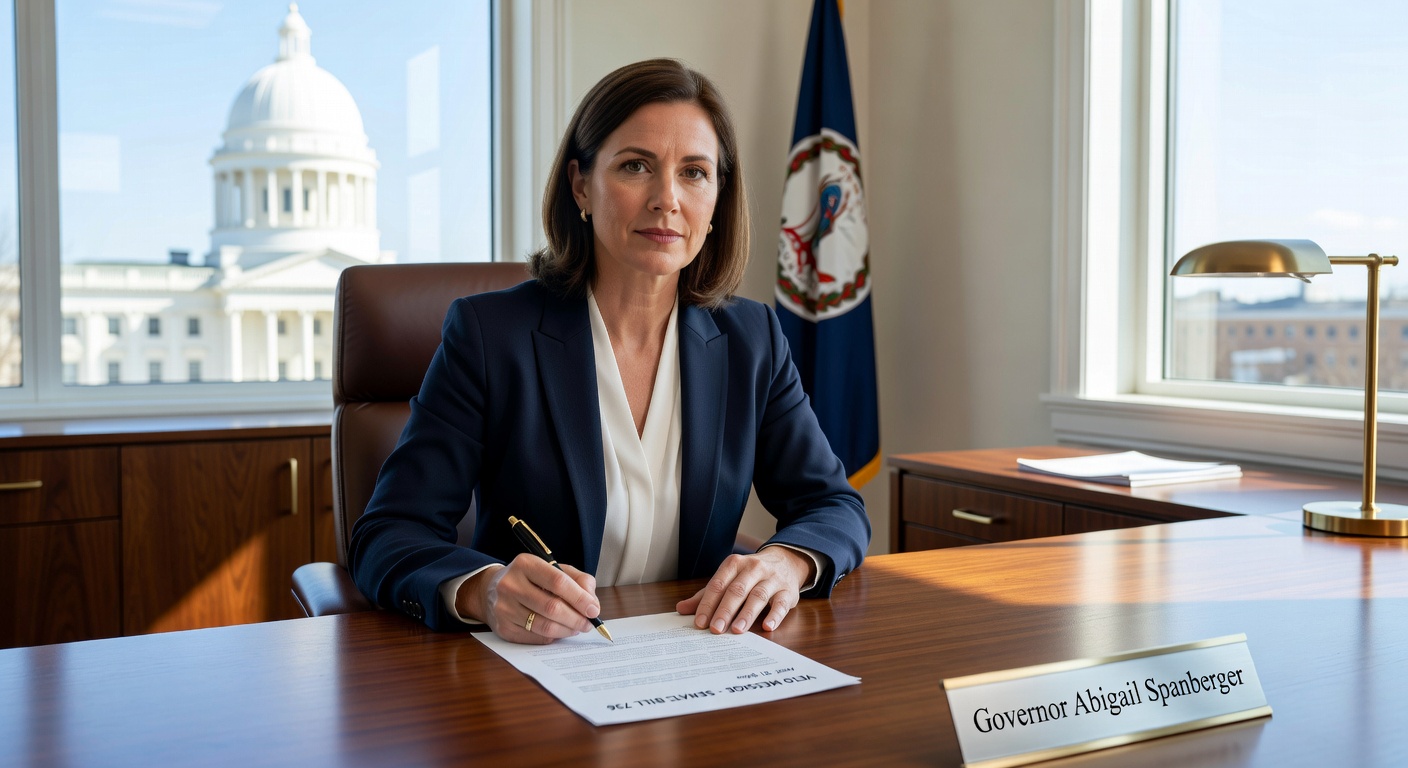
Governor Spanberger's veto message, released on April 10, 2026, emphasized respect for local decision-making processes, stating that overriding Fairfax County's elected officials would set a dangerous precedent for state interference in community affairs; according to the Governor's official newsroom, she highlighted how the bill conflicted with broader principles of home rule, a cornerstone of Virginia governance since its codification in the 20th century.
And while Spanberger, a former U.S. Representative from the region, has supported gaming expansion in measured ways—signing off on the original five licenses—she drew a line at forcing referendums where local leaders had clearly spoken; this decision aligns with patterns seen in other vetoes during her tenure, where fiscal incentives often yield to community autonomy, especially in Northern Virginia's politically diverse landscape.
Now, with the veto in place, Senate Bill 756 faces slim odds of an override, as Virginia's General Assembly requires a two-thirds majority in both chambers—a threshold rarely met for controversial measures like this one, particularly given Democratic control and mixed sentiments on gaming saturation.
Fairfax County's Unwavering Stance
The Fairfax County Board of Supervisors, comprising ten members from districts across the county, passed a unanimous resolution in February 2026 rejecting the casino proposal, pointing to studies showing potential increases in problem gambling, traffic congestion on already strained Route 7 and I-495, and strains on public services; data from the American Gaming Association indicates that casino-adjacent areas often see a 10-15% uptick in emergency calls related to gambling disorders, a statistic supervisors invoked in their deliberations.
Those who've followed Tysons' evolution know it's transformed from a suburban mall hub into a gleaming mini-Manhattan since the Silver Line metro opened in phases from 2014 onward, attracting tech firms and residents who prize walkability over neon-lit entertainment; developers behind the casino pitch, including Urban One and Colonial Downs Group, promised a $2.5 billion investment with features like 1,500 hotel rooms, 4,000 slot machines, and 200 table games, yet county planners deemed it mismatched for a zone zoned for innovation districts rather than full-scale resorts.
So, when Surovell's bill advanced through the Senate on a party-line vote in March 2026—passing 21-19 before clearing the House 51-49—it ignited backlash from civic groups like the Coalition for Tysons Future, who rallied over 5,000 petition signatures opposing the override, arguing that true economic growth in Fairfax comes from cybersecurity hubs and life sciences campuses, not gaming floors.
Virginia's Evolving Casino Scene
By April 2026, Virginia boasts five operational or near-completion commercial casinos, each greenlit through local referendums post-2020 legalization: Rivers Casino Portsmouth opened in 2023, drawing 1.2 million visitors in its first year; Hard Rock Norfolk followed in late 2025, while Danville's Caesars Virginia and Bristol's Hard Rock Bristol pump $100 million-plus in annual taxes statewide; Richmond's lone project, ONE Casino + Resort, nears shovels in the ground after voter approval, rounding out the quintet that generated $627 million in gaming taxes through 2025, per state lottery data.
Turns out, this windfall—funneled to education, water quality, and local aid—fuels ongoing pushes for more, yet saturation concerns loom, with experts observing that per-capita gaming spend in Virginia already rivals neighboring states like Maryland and West Virginia; Surovell, a longtime advocate for revenue diversification amid budget shortfalls, framed the Tysons casino as a Northern Virginia equalizer, potentially yielding $200 million yearly for Fairfax schools and transit, but opponents countered with evidence from Atlantic City, where over-expansion correlated with revenue dips after initial booms.
It's noteworthy that Colonial Downs, Virginia's horse racing track turned gaming partner, holds a stake in the Tysons bid, leveraging its historical presence since 1996 to argue for regional balance; still, the veto shifts the ball back to developers, who now must court the county board directly or pivot to amendment fights in future sessions.
Reactions Pour In
Immediately after the veto announcement, Fairfax supervisors issued statements of gratitude, with Chair Jeffrey McKay calling it a "victory for democracy," while Surovell expressed disappointment but vowed to explore overrides or revisiting the issue post-election; gaming industry voices, like the Virginia Casino Gaming Association, lamented lost opportunities, citing a WTOP report on projected 10,000 indirect jobs from supply chains.
Community advocates celebrated on social media, sharing visuals of Tysons' skyline to emphasize preserved vision, and business chambers split: the Northern Virginia Technology Council stayed neutral, but retail groups worried about competition from casino amenities; polls from Roanoke College in early 2026 showed 55% of Fairfax voters opposing a Tysons casino, aligning with the board's read of constituent mail.
Yet, as budget talks heat up for FY2027, pressure mounts on lawmakers eyeing any revenue edge, although Spanberger's stance signals that local buy-in remains non-negotiable, even as horse racing simulcast reforms and sports betting tweaks dominate quieter gaming debates.
Looking Ahead: Implications for Virginia Gaming
This veto doesn't slam the door on Tysons gaming entirely—developers could resubmit under county processes or lobby for zoning variances—but it reinforces Virginia's hybrid model, where state ambition bows to local votes, a framework that has approved four of five casinos while rejecting others like in Henrico County; observers tracking the sector predict steadier growth ahead, with 2026 revenue forecasts hitting $2.5 billion statewide, buoyed by online sportsbooks that outpaced land-based in Q1 figures.
People who've studied these dynamics point out how Spanberger's action mirrors national trends, where 40 states now permit commercial casinos yet face pushback in upscale markets like Tysons, home to median incomes exceeding $130,000 and a demographic skewing toward professionals wary of gaming's social costs.
Conclusion
In the end, Governor Spanberger's April 10, 2026, veto of Senate Bill 756 stands as a clear affirmation of local control in Fairfax County, blocking a forced referendum on the Tysons casino while spotlighting the delicate balance between economic lures and community priorities; as Virginia's gaming industry matures with its five core facilities thriving, this episode reminds stakeholders that expansion hinges on grassroots support, not top-down mandates, setting the stage for measured evolution rather than rapid proliferation in the years ahead.